Wednesday, March 5, 2014

Availability of PA Vital Records

I thought it might be useful, particularly for some beginners but also for those like me who always forget, to list when and where vital records from Pennsylvania tend to be available. So here's a quick reference list.

Births and Deaths

  • 1852 - 1854. This was a failed attempt of PA counties to record births and deaths statewide and they are usually available from the county Register of Wills (go to the county's government website) or archives. Sometimes, they may be available online, or an index of them will be.
  • 1873/1893 - 1905. This was a more successful attempt of counties to record births and deaths, most began in 1893 but a few (including Philadelphia, Chester, Cumberland, and Fulton) began in 1873. Some collections may go beyond 1905, for example, Philadelphia goes to 1915. These are also usually available at county level, from either the county Register of Wills (go to the county's government website) or archives. Sometimes, they may be available online (check with FamilySearch.org but also, sometimes counties will make the index available online, for example Berks County Register of Wills Index).
  • 1906 - 1963 Deaths and 1906 - 1908 Births. This was when the state took over the recording of births and deaths and actually began issuing official certificates. Up to this point, birth and death collections are merely registers or recordings, not certificates. Non-certified copies of certificates are available to order for a small fee from the PA State Archives by mail but will soon be available on Ancestry.com (with a subscription).
  • For births or deaths preceding 1852 or between 1854 and 1873/1893, check at county or especially city level. Big cities were more likely to start recording sooner. For example, the Philadelphia City Archives has Philadelphia deaths from 1803, a collection from various city sources (hospital records, cemetery returns, etc) - the index for it is available at Ancestry.com. And Pittsburgh started recording births and deaths in 1870. But mostly, you will be looking for baptism/christening or death/burial records from churches, obituaries, cemetery records/gravestones, and probate records (such as wills) instead. Some births which occurred before 1906 were issued a delayed registration certificate beginning in 1941 and are usually found at the county seat.
  • Death certificates after 1963 and births certificates after 1908 have not been released to the public. The Pennsylvania Department of Health, who issues the birth and death certificates, releases death certificates 50 years after they were issued and birth certificates 105 years after they were issued (so the most recent years will increase as time goes on, if I forget to update this, be aware that more recent years might be available). To order a certified copy of a birth or death certificate which has not yet been released to the public from the Department of Health, you must be able to provide identification proving you are ordering your own birth certificate, or that you are immediate family, legal representative, or power of attorney. Certified copies of death certificates can also be ordered by extended family members but only those who have a "direct relationship with the decedent". Alternatively, the Social Security Death Index is available on Ancestry.com from 1935 to present (though keep in mind not all deaths are listed here, only those with social security numbers whose deaths were reported, usually for benefits) and other options include obituaries, church records, or cemetery records/gravestones.

Marriages
  • 1885 - present. Counties statewide began recording marriages/issuing marriage certificates in 1885 and continue to do so today so government recordings of marriages from this period will be found at county level, usually from the county clerk of orphans' court (see the county's government website). Some may be available online - FamilySearch.org has Pennsylvania County Marriages from 1885 - 1950, however, not all counties in this collection cover this entire period.
  • Marriage recordings prior to 1885 can sometimes be found from the county or city so check on a more local level to see what might be available - either the county or city government website. But usually, you will have to look for church records or newspaper announcements. 


For more details about this topic, see FamilySearch.org's wiki page of Pennsylvania Vital Records. This is just a quick reference guide.

Also check out Ancestry.com's Pennsylvania BMD records in their card catalog (you can narrow it down to county level too) and FamilySearch.org's Pennsylvania collections.

Saturday, March 1, 2014

A Spinster's Chance in Hell of Marrying

Think an "old" spinster in history didn't have a chance in hell of ever marrying? Often I see people with this misconception, that in history, once a woman was passed a certain age, she had little to no hope of ever marrying and would be considered an old maid. The specified age varies, some people seem to think it was as low as 18! Others are a little more realistic and put it around early to mid 20s.

In my experience, the average age at first marriage for women was actually in the early to mid-20s and therefore an unmarried woman of this age would not necessarily be considered an old maid, doomed to a barren, solitary life. Though there are plenty of examples of women who married for the first time aged 30+, this is closer to the age group I would label "old maid" or "spinster" since this is the smallest age group of women marrying for the first time. But it was certainly not unheard of. Consider the fact that childbirth took many female lives and left widowers with young children and no mother to take care of them. Often, a man might be pleased to take an older, never before married second wife to look after his children. It would mean he wouldn't have to take in her fatherless children from a previous marriage and since he already had children by his first wife, he would not have been as concerned about whether his second wife was still young enough to bare children or not. Of course, plenty of women then and now are able to start having children well into their 30s and even 40s but it does become less and less likely as time goes on.

But take, for example, my recent venture into studying the marriages of Butler County, Pennsylvania. I have ancestry there, mostly around the mid 19th century, and for the purpose of my family history writings, I wanted to get an idea of the average age that a woman would marry for the first time in this location during this time period, and also at what age the local law said a woman could marry without a parent's or guardian's consent. Unfortunately, the Pennsylvania County Marriages collection at FamilySearch.org only have marriage records for Butler County going back to 1885 but it was as close as I was going to get to the mid-1800s. Here are the results, I hope you find the stats as interesting as I do, though please keep in mind that different locations and different time periods may have different results, particularly regarding the age at which one can marry without consent of a parent or guardian needed. However, I would not be surprised if at least most of Pennsylvania had similar results, just based on my general experience doing genealogy research. If I had the time, I would do this for each available county in PA but for now, I sampled 300 records (out of about 630, basically the first half of folder 004811571) of the 1885-1886 records to get these stats.

In Butler County, PA, anyone under the age of 21, male or female, needed consent from a parent or guardian to marry. While this doesn't mean that marrying under 21 was unusual, especially for women, it does go against our idea that children grew up faster and married significantly younger, as teenagers. Needing consent to marry before the age of 21 suggests that people under this age were viewed as too young to make their own decisions without guidance and approval. In fact, the term "filia" was often used to refer to those under 21, which is a legal term for a child or minor. Compared to today's laws where people reach the age of majority and can marry without consent from the age of 18, the laws from the 1880s seem very conservative.

84% of men were marrying for the first time, while 95% of women were marrying for the first time.

The average age of men at their first marriage was 26. Only 4% of men married under the age of 21 and therefore required parent or guardian consent. This is not unusual in a time when a husband was expected to support his wife and children so men were encouraged to wait until they had either steady work, set up their own shop, or established their own farm before they married and began having children. The youngest men married at 18 years old so there were no cases of men marrying under 18 at all. This suggests men were not able to marry under the age of 18 even with consent of a parent. The oldest age at which a man married for the first time was 47.

The average age of women at their first marriages was 23 and 30% of women married under the age of 21, requiring their parent's or guardian's consent. This means the majority of women certainly did not marry as teenagers, but that it wasn't unheard of, with 22% of women marrying under 20. The lowest age at first marriage for a woman was 15, suggesting girls under this age could not at all, even with consent. The highest age at which a woman first married was 49 years. Take that, spinsterhood!

Now let's look at some of the age differences between the bride and groom, since there also seems to be a misconception that it was very common for a teenage girl to be married off to a 30+ year old man. Again, not unheard of but also not the norm. In 88% of cases, the bride and groom were within an age difference of 10 or fewer years. In fact, in 10%, the bride was actually older than the groom! Of the remaining cases in which there was a higher age difference of 11 or more years, 30% of them had a teenage bride (or in other words, 4% out of the total had an age gap of higher than 10 and included a teenage bride). The largest age different was 25 years, the groom being 47 and the bride 22.

Lastly, I did record some data from second (or third) marriages as well. The average age for a man at the time of a second (or third) marriage was 41, with the youngest age being 25 and the oldest 64. For a woman, the average was 40, with the youngest being 23 and the oldest 50. Divorce was certainly taboo but don't kid yourself that it never happened or that it was illegal - there were 4 cases where the groom remarrying had divorced his first wife and one case where the bride had divorced her first husband.

Today, the average age at first marriage for men across the U.S. is 29 and for women, it's 27. So while it's true that people tended to marry younger in the past, it was not so drastic as some people seem to think, with the averages instead being around 26 and 23 respectively (at least for Butler County, PA). I recall once hearing someone say that in the past, if one wasn't married by 18, they were "done", or had no hope of marrying. Hopefully, with these examples, I have helped to dispel these kinds of myths.

Update: I have since compiled another 225 marriage records from 1891, also in Butler County, Pennsylvania, just to be sure the previous year I calculated wasn't some kind of fluke and found the stats were very similar.

  • Average age at first marriage for men: 26
  • Average age at first marriage for women: 22
  • Oldest man marrying for the first time: 49
  • Youngest man marrying for the first time: 19
  • Oldest woman marrying for the first time: 45
  • Youngest woman marrying for the first time: 15
  • 4% of men married under the age of 21 and therefore required parental consent
  • 32% of women married under 21 and required parental consent
  • 89% of men were marrying for the first time
  • 95% of women were marrying for the first time
  • Average age of men marrying for 2nd or 3rd time: 38
  • Average age of women marrying for 2nd or 3rd time: 34
  • 25% of men marrying for the 2nd/3rd time had been divorced
  • 17% of women marrying for the 2nd/3rd time had been divorced

Friday, February 14, 2014

Primary & Secondary Sources

In genealogy, we often come across conflicting data that leaves us wondering which fact is accurate, or more likely to be accurate, and therefore should be put into our tree. The best way to determine this is to understand the documents you're using, how and why they were recorded, and assess whether they are a primary or secondary source.

Marriage records, primary source for the marriage fact
but a secondary source for the birth fact.
A primary source is a document which was recorded at the time the event took place. A birth certificate is a primary source for a birth event, a marriage record is a primary source for a marriage, etc. Many documents also supply information of previous events, such as a marriage record listing the ages or birth years of the couple marrying. This is a secondary source, a document which was recorded well after the event occurred. So a marriage record is a primary source for the marriage event but a secondary source for a birth event. Needless to say, a primary source is more likely to be accurate than a secondary source, though that doesn't mean it's impossible for a primary source to be inaccurate too, but it's generally more trustworthy than a secondary source. Watch out for deceptive documents that might seem like they are a primary source but which may actually have been recorded years after the fact. This is why it's so important to understand what type of document it is that you're looking at and when it was recorded.

A secondary source can also be a document in which the informant is someone other than the individual that the document is about, particularly when it comes to information which is not really a time sensitive event, such as the names of a person's parents. A death certificate is a primary source for the death event in the sense that it is recorded at the time of the death, but can also be considered a secondary source considering all the information on it is supplied usually by a near relative of the deceased and/or a doctor/medical examiner. For example, a widow who never met her deceased husband's parents may provide their names incorrectly on the death certificate because she is a secondary source for that information. So with death records, it's especially important to examine who supplied the information and assess how reliable they might have been. Take into consideration that grief can confuse people and even close relatives can be estranged for so long that they don't know many of the facts of the deceased's life.

The other half of assessing a document's accuracy is understanding why and how it was recorded. Census records, for example, are frequently misunderstood by beginners to genealogy. I think in today's world, there is a common belief that any sort of government document is 100% accurate but that is certainly not the case. They're likely more accurate now than they were in history, because our record keeping has become more efficient, but even census records today are taken for demographic purposes, not identification. This means that it is not as crucial for many of the personal details filled out to be totally accurate. In the past, when censuses were taken by enumerators going door-to-door, this was especially true since there was more room for error, census records are like secondary sources twice over. The enumerator might have misheard or misunderstood the informant and don't dismiss the possibility that the informant themselves might have provided the wrong information. Generally, one person provided the information for everyone in the household, making them a secondary source for everyone but themselves. They might have been an in-law or youngster who wasn't confident about exact birth dates or locations, or a forgetful grandparent. If no one was home when the enumerator knocked on the door, they were supposed to return to the address later, but sometimes it was all they could do to simply ask a neighbor for your ancestor's details. Names and spellings weren't of the highest priority and I've even seen genders recorded inaccurately. Many censuses didn't even record a birth year or date, only the age of the individual and so naturally, this means that birth years calculated from an age are commonly out by a year or two. So everything on a census document should be taken with a grain of salt (except perhaps the date and location where the census was taken). This doesn't mean you should discount census data, but until you can confirm it with other, more reliable sources, keep in mind that the information from it might be subject to change at some point down the line. Birth years from census records should be input into your tree with "abt." (about) in front of them so you know it's approximate. Same goes for immigration dates, marriage years, etc. The census is a secondary source for all of these types of facts, except maybe if the event occurred immediately preceding the census.

Lastly, don't dismiss the possibility that an individual doesn't even know certain details about themselves, like when or where they were born, especially if they were born before the government began issuing official birth certificates. I know this seems impossible by our standards - how can someone not know when or where they were born? Didn't they celebrate their birthday? It's possible they did not. While birthday parties and birthday gift giving became popular in the 19th century, many poorer folk may not have been able to celebrate a birthday like we do today and certain cultures may not have participated. In any case, if an individual did not even know when or where they were born, naturally, recording these details in secondary documents would have been problematic and therefore they may vary on different records. This is why primary sources are so important.

Wednesday, February 12, 2014

The Patriotic Society of the City and County of Philadelphia

Never heard of this? Neither had I, but it played a noteworthy role in our state's and even our nation's history. Anyone with German ancestry in Pennsylvania might find this interesting.

In colonial times, the German population was strong, particular in Pennsylvania where by 1790, they made up about a third of the total population. It is not surprising therefore that the English were wary of their influence in the colonies, which was particularly strong in elections such as for the Colonial Assembly (the colonial governing body), because the Germans tended to all vote for the same candidate. The Germans themselves were largely influenced by their German newspapers in the colonies, particularly Christoph Sauer's newspaper in Philadelphia, which was known for having anti-English sentiments. In fact, it seemed to have made use of a little bit of propaganda by impressing upon the Germans that the English intended to enslave them and enforce compulsory military service among their young men, much like the circumstances from which they had fled their homeland. As a result, the Germans frequently refused to serve in the army for Britain's fight against the French over Canadian territory. In turn, the English feared that the Germans were strong enough in numbers to rise up and turn Pennsylvania into a German nation, thus there was a lot of prejudice among the English against the Germans. Proposals were put forward to bar the German's from having a vote in the Assembly, during which time they would also be forced to learn English. It never happened though, and as a result, the German language prevailed in America all the way up to World War I.

Benjamin Franklin, unfairly critical of Germans
in Pennsylvania
But in colonial times, the prejudice against the Germans was so strong that even our beloved Founding Father Benjamin Franklin shared harsh, negative views of them. In a letter from him to Peter Collinson in 1753, he wrote the following:
"I am perfectly of your mind, that measures of great temper are necessary touching the Germans, and am not without apprehensions that, through their indiscretion, or ours, or both, great disorders may one day arise among us. Those who come hither are generally the most stupid of their own nation, and as ignorance is often attended with great credulity, when knavery would mislead it, and with suspicion when honesty would set it right; and few of the English understand the German language, so that they cannot address them either from the press or pulpit, it is almost impossible to remove any prejudice they may entertain. The clergy have very little influence on the people, who seem to take pleasure in abusing and discharging the minister on every trivial occasion. Not being used to liberty, they know not how to make modest use of it. They are under no restraint from ecclesiastical government; they behave however, submissively enough at present to the civil government, which I wish they may continue to do, for I remember when they modestly declined intermeddling with our elections ; but now they come in droves and carry all before them, except in one or two counties. Few of their children in the country know English. They import many books from Germany, and, of the six printing houses in the province, two are entirely German, two half German, half English, and but two are entirely English. They have one German newspaper, and one half German. Advertisements intended to be general, are now printed in Dutch, (German) and English. The signs in our streets, (Phila.,) have inscriptions in both languages, and some places only in German. They begin of late, to make all their bonds and other legal instruments in their own language, (though I think it ought not to be), are allowed good in courts, where the German business so increases, that there is continued need of interpreters, and I suppose in a few years, they will also be necessary in the Assembly, to tell one-half of our legislators, what the other half says. In short, unless the stream of importation could be turned from this to other colonies, as you very judiciously propose, they will soon outnumber us, that all the advantages we have, will, in my opinion, be not able to preserve our language, and even our government will become precarious."
It is therefore rather ironic that not long later, many of the "English" of the colonies, who previously feared the loss of British rule to the German settlers, were now unified with them against the British in the American Revolution. With the exception of many of the pacifist Mennonites who held an indifferent stance in the conflict, the Germans were firmly on the side of the Patriots. In 1772, the German residents of Philadelphia held a significant amount of influence in business and civic matters and created an organization called The Patriotic Society of the City and County of Philadelphia. Its intent was to prepare and support what they correctly viewed to be the inevitable struggle for the colony against the British. Though it gets little mention these days and does not even have a Wikipedia page about it, its existence shows the support of the German faction of Pennsylvania in the Revolution, despite the harsh prejudice previously against them. Understanding their vast numbers in the colony proves just how important their support was for the success of the Revolution and the creation of our nation.

Sources: 

Sunday, January 26, 2014

My DNA Results Are In!

One of the gifts I asked for and received this Christmas was an autosomal DNA test kit from Ancestry.com. I sent it off with my DNA before the end of the year and then patiently, or rather impatiently, awaited the results. Today, I received an email saying that were in so I eagerly logged into Ancestry.com and went to my DNA hompage. I was both surprised and unsurprised by the results.

My strongest ethnicities map
While all the strongest ethinicities listed were not unexpected, I was a little surprised that I had so little "Europe West" (which would be my German heritage) and so much British because in my tree, I feel like I have more German ancestors than British. However, I do understand that we inherit random amounts of ethnicity so just because I have more German ancestors doesn't necessarily mean I'll be mostly German. I guess I just thought statistically, that would be more likely to be the case. Plus, my maiden name is German, which of course I know means nothing really, but somehow I just feel like I have to reassess my ethnic identity a little bit. My English husband was pleased to hear I'm mostly British though, and joked that his secret injections in the middle of the night must have worked!

Meanwhile, I was also not surprised to see a reasonable amount of "Italy/Greece" since my paternal grandmother was Italian, but I was surprised that it's likely to be as much as around 1/3 of my ethinic make up because everyone says I look just like my mom so I always thought my non-Italian side was genetically stronger. Apparently this is not the case since my mom has always considered herself mostly Norwegian and German but my DNA came back only 5% "Europe West" (German) and 2% Scandinavian (Norwegian).

Here's the full results:
  • Africa < 1%
    • Trace Regions <1%
      • Africa North < 1%
  • Asia < 1%
    • Trace Regions <1%
      • Asia South < 1%
  • Europe 95%
      • Great Britain 55%
      • Italy/Greece 31%
      • Europe West 5%
    • Trace Regions 4%
      • Scandinavia 2%
      • Finland/Northwest Russia 1%
      • Ireland < 1%
  • West Asia 3%
    • Trace Regions 3%
      • Caucasus 2%
      • Near East 1%

Full Ethnicities Map, including trace amounts
Apparently any amount likely below 5% is considered a "trace" region and it was interesting to see very trace amounts of genes from South Asia and North Africa. These trace amounts are represented in the map to the left as outlines whereas the regions filled in with color are my three strongest ethnicities: British, Italian, and German (shown closer above). My mom was very disappointed to see her Norwegian heritage represented only trace amounts.

I think it's noteworthy that the trace amounts of North African actually include parts of the Mediterranean, such as Sicily, which is where my great grandfather was from so it's likely these small portions of North African came from my Italian side long ago when Sicily was a very Moorish region. In fact, my dad says that his Sicilian grandfather used to talk about how a lot of Northern Italians held prejudice against Southern Italians, especially Sicilians, for their "darker" skin, hair, and eyes, which was probably from the Moorish influence.

It's because of my Sicilian heritage that I was also not too surprised to see some trace amounts from regions like the Middle East and Eurasia since both border the Mediterranean. In history, I think there was a lot of intermixing and intermigrations that went on around in nations in the Mediterranean.

Equally, the trace amounts from Findland/West Russia didn't surprise me because it's probably related to my Norwegian heritage. The only trace that really surprised me was the South Asia, which in particular seems to be mostly circling India. I don't have a clue how that got there but it's fascinating all the same. Everyone in my family is now saying my brother should have the test done as well, to see how ours compare. This stuff is addictive!

Friday, December 27, 2013

Chestnut Hill Park

Freshly polished, a sugar bowl engraved with CH Park,
Chestnut Hill Park.
Among our many family heirlooms is a silverware set and sugar bowl engraved with C H Park, which is short for Chestnut Hill Park, an amusement park also known as White City Park which existed in the early 20th century. It was located in Springfield Township near Chestnut Hill where Bethlehem Pike and Paper Mill Road meet. We have these anitiques because my 3rd great grand uncle, Clinton Rorer, was one of the founders and briefly president of the park before he died in December of 1899. While doing research on the park, I was surprised to find no Wikipedia page for it and so I created one myself. After Clinton's death, the park was purchased by White City in 1906, a chain of amusement parks across the nation and even international. There was a pre-existing Wikpedia page for White City with a list of locations, most of them without their own individual pages so if anyone has enough information about the other parks, please consider creating a page for them as well.

Silver plated forks engraved with CH Park
As I have mentioned before, Clinton Rorer never married or had children so everything of his was given to his two nieces, Mary Ann (Rorer) Fallows and Emma G. (Rorer) Aiman. Mary Ann was my 2nd great grandmother and the C H Park merchandise was passed down to her daughter, Emma Sarah Fallows, and then to my grandfather, Chester Harold Godshall Jr. The fact that my grandfather shared the initials C.H. is pure coincidence, although it did lead to some confusion when my mom was a small child and thought her father once owned a park.

Sadly, Chestnut Hill Park did not exist for very long. In February of 1898, the Chestnut Hill Casino Company purchased 25 acres of land for it's development and it was ready to open by May but due to heavy rains, the opening had to be pushed back until June. Over the years, it featured many attractions including a large lake with row boats and electric launches, 50,000 fragrant plants, a carousel, a live brass band, and later, a rollarcoaster, pony track, and roller skating rink. It also hosted events and entertainment such as athletic meets, vaudeville performances, acrobats and gymnasts, and the presentation of a baby elephant named Little Hip.

Close up of the engraving
The park was intended to provide a more affordable option to Willow Grove Park for the middle to lower class of Norristown and Philadelphia. Although both parks offered free admittance, the trolly fare to Willow Grove was 30c whereas Chestnut Hill was only 5c. Unfortunately, the upper class residents of Chestnut Hill resented the crowds of lower class vistors to the area and in February of 1912, despite the previous year being the park's most successful, several wealthy locals pooled their money, bought the park, and immediately shut it down before the seasonal opening in the spring. After demolishing it, the land remained unused until 1927 when Erdenheim High School was built on part of it, which now operates as the Philadelphia Montgomery Christian Academy. Just north of Montgomery Ave, also on what would have been the park's land, is Antonelli Institute, a photography and graphic design school I coincidentally graduated from! Also north of Montgomery Ave is a small street named after Clinton Rorer called Rorer Street. There is also an Auchy Road, named after one of the other owners.

It's a shame the park only existed for 13 years and it's also a shame Clinton only lived long enough to see it operate for two years. However, I may not have been able to attend my photography school had it not been shut down and I am grateful these beautiful memorabilia have survived. Unfortunately, I can't share any of the surviving images of Chestnut Hill Park because I don't know what the rights situation on them is but if you google it, you can find some postcard images. And I can, of course, share images of the Chestnut Hill Park antiques.

Monday, December 9, 2013

What I'll Miss About England (And What I Won't)

After about 8 years here in Manchester, UK, my English husband and I are moving back stateside in one week after the months-long process of obtaining his visa. I can't wait to be able to see my friends and family in Pennsylvania on a regular basis again but there's a lot of things I'm going to miss about living here . . . and a lot of things I won't.

I will really miss this kind of history in the UK.
Thing's I'll miss:
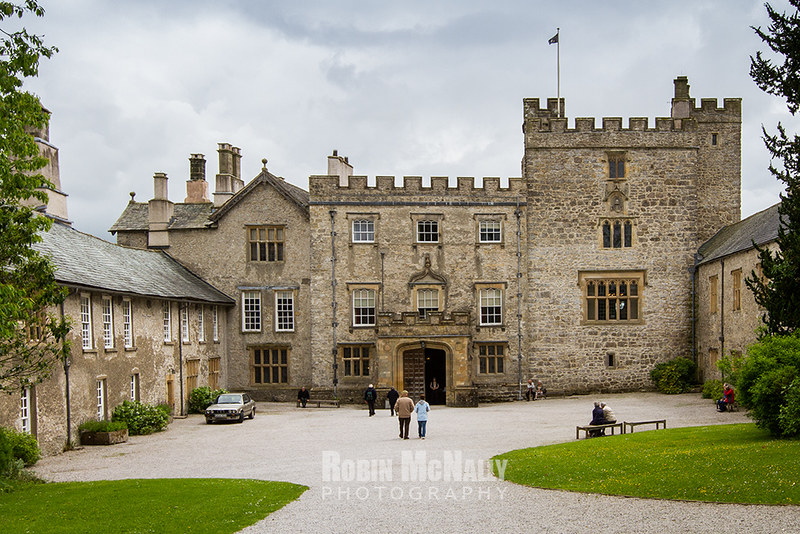
  • The history. I love history. Don't all genealogists? I love it whether it's my own family history or not. And the UK is so rich in history. The castles, the halls and manors, the roman ruins, viking towns, etc. It's all so beautiful and romantic and it's been practically on my doorstep for eight years.
  • The countryside. Drive a mere half hour out of the city and all you'll see for miles are lusciously green rolling hills dotted with fluffy sheep and lined with stone walls and fences. The UK does not really have the "suburban" culture so common in America.
  • The accents. I loved getting to know all the different accents across the nation and I'll miss them all (well, most of them). At least my husband will be bringing his with us.
  • The music! This is essentially what brought my husband and I together in the first place, our mutual love for British music. Of course we'll still be able to listen to British music but we'll miss the live music scene and our favorite radio station, XFM Manchester. I honestly don't know what we're going to listen to in the car without it.
  • The chocolate. So smooth and creamy. Need I say more?
  • The pubs/Sunday roast. How would you like to have a Thanksgiving or Christmas dinner every sunday? Roast turkey, beef, chicken, ham, or lamb, with gravy, roasted vegetables, perhaps even mashed potatoes, and my personal favorite, Yorkshire pudding. And you get to eat all this in a beautiful, historical, cozy gastro-pub with a roaring fireplace. Sounds great, right? My husband and I have vowed to maintain a Sunday roast tradition but it will be at home, not in our favorite pubs.
  • No tipping necessary. In the UK, tipping is not commonplace and only done for exceptional service, which is the way it should be. By definition, gratuity is optional, not expected.
  • Fewer bugs. I'm the kind of person who, for some inexplicable reason, attracts mosquitoes like a moth to a flame. I go to the Caribbean and come back with 30+ bug bites. England thankfully has so few bugs that most homes don't even have screened windows. I will miss itch-free summers.
  • The plumbing. This might seem like a strange topic but it's time the truth was told! In the UK, toilets don't get clogged. That's right, you read it correctly, they don't clog. When my English husband clogged his first toilet in America, he had no idea what was wrong and I amusingly had to show him how to use a plunger. I couldn't understand how someone could reach the age he was without having clogged a toilet before! After living in the UK, I now understand. British toilets, instead of merely releasing water into the bowl to flush it, have a mechanism which pushes the water out forcefully, flushing it more effectively. Apparently, it is something which can be installed into American toilets, called a "flush assist" and for the life of me, I don't know why it isn't the norm like it is in the UK.

Thing's I won't miss:
  • The WEATHER. I don't think words can fully express how much I hate the weather here but I'll try. It's cold, it's damp, it's rainy, it's cloudy, it's windy. I never minded the rain until I moved here, I even rather enjoyed a good thunderstorm. But in eight years, I've never seen a real thunderstorm here, it's just a dull, dreary drizzle. Maybe once or twice a year I'll hear a low murmur of thunder and my husband will excitedly exclaim "Whoa, did you hear that?!" That's not thunder, thunder is getting snapped awake from a dead sleep by what can only be described as God himself smacking his whip against the skies. But it's not just the rain which depresses me, the average highs in the summer are in the low to mid 60s. The rare days when it gets above 70, the warmth is quickly countered by 20-30 mph gusts of winds. And the winters aren't much different. Snow? Fat chance. Just more rain and wind, with average temperatures only about 20 degrees lower. The one big snowstorm we had while I lived here was not dissimilar to the snowstorms that usually hit the Philly region at least once a winter, except everyone in the UK kept declaring that they hadn't seen snow like this in 20 years and no one knew how to drive in it, though in their defense the city is ill-equipped to handle it since they're not used to it. They salt and grit the roads but there are no plows. 
  • Having to do 90% of my genealogy research online. I have two, possible three English branches which originated from England and one of which were coincidentally from an area just outside where I live now in Manchester. But otherwise, the research that requires going to cemeteries and such in the U.S. could only be done in short bursts when I was visiting family back home. I can't wait to be able to go places for my research whenever I want!
  • People looking at me like I've got two heads because they're not expecting me to have an American accent. Really. You'd think they'd never heard an American accent before. I can't wait until I no longer feel like I don't completely belong or fit in where I live. I realize it means my English husband might feel this way in America but he's much more adaptable and laid back than I am.
  • Not being able to drive. Okay, I could have driven but it would have required learning to drive manual and on the left side of the road at the same time. I'll be so glad to be back in a situation where I am actually comfortable driving.
  • The spoons! Another strange topic but seriously, the spoons here are either too big or too small, like some kind of weird Goldilocks universe. The big ones look more like mixing or serving spoons and the small ones have a very shallow scoop. My husband didn't understand what I was complaining about until my mom sent me a normal American spoon and while he was using it with his cereal exclaimed, "This is a good spoon, I like it." Yeah, I know! 

I'm sure I'm forgetting some things but that's the bulk of my personal pros and cons of living in England. While it looks like there's more things I'll miss about it than those I'll be grateful to get away from, ultimately being near my friends and family again trumps everything. Also exciting about the move is that we'll we taking a ship instead of flying. I'd like to say it will be like taking the journey my immigrant ancestors did across the Atlantic but I'm pretty sure my trip will be much more luxurious!

Tuesday, October 8, 2013

Go Beyond the Search Engine

When records are digitally indexed so they can be found with a search engine, it makes research a lot easier. But not all digital documents are transcribed. If you've only ever typed your ancestor's details into a search engine to find records, you may be missing out. Both Ancestry.com and FamilySearch.org have certain collections which can only be manually browsed, much like a microfilm.

Ancestry.com's Card Catalog allows you to browse all the collections on their database, both indexed and not and you can narrow collections down by location, date range, language and record type. Unfortunately, they aren't great about indicating which collections have been transcribed and which haven't so I find it best to merely browse the collection titles by location and see what looks promising whether transcribed or not. For example, I found some records for my Italian ancestors by manually browsing the images in the Siracusa, Sicily, Italy, Civil Registration Records, 1900-1929 collection.

Though not transcribed, you can find
PA Wills in this Probate Records collection.
FamilySearch.org All Published Records Collection is like Ancestry.com's card catalog, allowing you to browse their entire digital database and narrow collections down by location, data range or collection type. But FamilySearch indicate when a collection hasn't been digitally indexed under the "Records" column - if it says "Browse Images", that means it hasn't been indexed. I recently found a bunch of Last Wills & Testaments by browsing the Pennsylvania Probate Records, 1683-1994.

I know that manually flipping through hundreds of images may seen impossibly time consuming but often, you can narrow it down by date or name and sometimes, there are scanned indices. For example, the Pachino records in the Siracusa collection where I found my ancestors have a separate "Indice" book. Also, in the Pennsylvania Probate Records, sometimes there is a direct Will Index but in other counties, you need to first look in the Estate Index, which will point you to where you can find the right reference in the Proceedings Index, which will then finally tell you what volume and page in the Will Books you're looking for.

Also noteworthy is the fact that FamilySearch.org have thousands more records available on microfilm which haven't been digitally scanned yet. These can be found and ordered from the Catalog section and the microfilm will be delivered to your nearest Family History Center. Just pop in the location you're searching within and see what microfilm collections they have available.

Sunday, October 6, 2013

Happy German-American Day!

Germantown Seal
Today is officially German-American Day. I love this day because I have so many German ancestors, just as many other Americans do. One only needs to stop and consider the surnames of the people around them to see how many are German in origin. Even those that may not sound German have often been Anglicized from a German name. The day is used to observe and celebrate the date that the first significant group of Germans arrived in Philadelphia in 1683 and founded Germantown, 330 years ago today. Conveniently, it also usually coincides with Oktoberfest, often falling in it's final days or just after.

German heritage is so strong in America that myths have been created about it, such as the one that our official language was nearly German. This is false because for starters, America has no official language to begin with. What actually inspired this myth was when the U.S. Government considered making it a requirement that all government documents be translated into German. It didn't happen but if it had, it would have just meant that all government documents would be available in German as well as English, not that German would replace English. However, even the truth of the matter shows just how prominent the German language was in our culture.

Old Germantown, Philadelphia
When did this change? Mostly during World War I when there was a lot of anti-Germany sentiment in America. Germany were our enemies and speaking German was felt to be unpatriotic so there was a drastic decline in the language at this point. And if that wasn't enough, certainly the second world war put the nail in the coffin for the language. During this time, posters discouraging the use of languages like German and also Italian and Japanese were distributed. Only communities like the Amish and Mennonites retrained the language, further isolating them from the rest of society. For a long time after WWI and particularly WWII, we were unable to take much pride in our German heritage, even if our ancestors had come to the country well before the first world war, it was felt to be in bad taste to celebrate German culture or history at all. German-American Day had been informally observed up until WWI and it wasn't until 1983, on the 300 year anniversary of the first group of German's arrival in Pennsylvania, that it was revived by law as an official day of observance. Unfortunately, it's not enough to get a day off work/school though and even today, after 30 years as an official, national day of observance, it goes significantly overlooked. Though many cities across the U.S. host a Steuben Parade, it usually takes place in September, well before German-American Day.

German-American Day is significant to me not only because I have many German ancestors but because some of them were a part of the early Germantown community. My ancestor Jacob C. Gottschalk, arrived in Philadelphia in 1701 or 1702 and became a preacher in the Germantown Mennonite community alongside William Rittenhouse. After Rittenhouse's death, Jacob became the first Mennonite Bishop in America.

Why is German-American Day important to you? Should it receive more attention? Who were your German ancestors?

Eat a pretzel today, they're German!
Here's some good reasons to celebrate German-American Day:

  • The Christmas tree originated in Germany.
  • Food! Hot dogs (Frankfurters), hamburgers, bratwurst, sauerkraut, strudels, pretzels - all German influences. And foods like shoofly pie and funnel cake have their origins with the Pennsylvania "Dutch".
  • Beer! German-Americans played a large role in beer production in America.
  • Religion. Most Lutheran and Anabaptist churches in America were founded by Germans and let's not forget the leader of the Reformation was Martin Luther, a German.
  • Farming and craftsmanship. Palatines in particular were revered as the among the best farmers in the world and helped make Pennsylvania's agricultural history as important as it was.
  • Classical music. Beethoven, Mozart, Bach, etc. It may not be your favorite style but they undoubtedly created iconic music that will last forever.
  • The public school system in America was heavily influenced by the German concept of free common schools.
  • Folklore and fairy tales. Cinderella, Snow White, Sleeping Beauty, etc... Disney got them all from the Brother's Grimm, who had collected them from oral story telling in Germany.
  • The first anti-slavery protest was published in Germantown, PA in 1688, a mere 5 years after the area was founded, and some, if not all of the signees were German. Quakers and Mennonites of the area strongly opposed slavery and wasted no time making that clear to the world. Though the Quaker movement began in England, many German Mennonites had converted to the Quaker faith when William Penn and others preached their beliefs in the Rhine valley.
Have I missed anything obvious? Feel free to comment below.

Images thanks to Wikipedia.

Wednesday, September 25, 2013

Captured by Native Americans

I recently discovered my 7th great grandparents Noah Frederick and Margaretha Becker were attacked and killed by Native Americans and that their son, my 6th great grandfather Thomas Frederick, was abducted by them. This was in 1756 in an area of Pennsylvania near Jonestown, not too far northeast of Harrisburg, in what was then Earl Township, Lancaster County (now Lebenon County, Earl Township defunct). Thomas would have only been four years old so it's difficult to say if he even remembered the event. By one account, two of his siblings were also taken captive, though I have yet to discover their names (if anyone knows them, please leave a comment!). They could not have been with the Natives for more than two years though, since records say they were released to the French Fort Duquesne, which was destroyed and replaced by Fort Pitt in 1758 and later developed into the city of Pittsburgh.

Thomas, now an orphan, apparently grew up under unknown guardianship in Philadelphia where there was no longer threat of Indian attacks. He later returned to the area of his tragic youth where he married Ann Margaret Tibbens in Bethel, Lancaster County in 1774. Two years later, the Revolutionary War broke out and Thomas joined up, fighting for his nation's independence.

An 1860 map of Centre Township, Columbiana County,
Ohio with Frederick lands outlined in red. J. Frederick was
Thomas' son, John. Thomas may have own all three lots.
Later in life, Thomas made a somewhat surprising move out to Lisbon, Centre Township, Columbiana County, Ohio in 1804. This area was only just beginning to be settled, Ohio had been admitted as a state merely one year prior, and so it was still very much the frontier at the time, still susceptible to Indian attacks. For this reason, land was often cheaply or even freely available as an incentive to settle the land. It seems surprising that Thomas, who had been a victim of such attacks as a child, would uproot his settled family and take up this particular risk. However, as a orphan, Thomas probably inherited nothing and had to make his own way in life. We don't know what his situation in Pennsylvania was like, perhaps his family did not have much to live on and maybe the opportunity to freely or cheaply acquire a lot of land was too good to pass up. He and Margaret had a grand total of 12 children together so they had a lot of mouths to feed. Obviously, Thomas' experience as a child did not stop him from taking a chance and moving out to the frontier. It is this kind of courage and initiative on which America is founded.

To read more and view sources, check out my Frederick Family History.