Showing posts with label england. Show all posts

Tuesday, May 6, 2014

myOrigins at FamilyTreeDNA

Family Tree DNA users might have noticed their new and hopefully improved myOrigins which replaces the old and less detailed Population Finder. Most notably, we now have more of a break down of our ethnic background into sub regions. Whereas before I was simply 72% Western European and 28% "Middle Eastern" (this was my Italian heritage), now it's telling me more specific regions such as 34% European Northlands (Norwegian, for me) and 26% European Coastal Plain (my Swiss/German heritage). Additionally, it seems to have regrouped 20% of that so-called Middle East into the more accurate European subgroup North Mediterranean Basin, but it's still telling me 17% Middle Eastern with subgroups 12% Anatolia and Causcasus (mostly Turkey) and 5% Eastern Afroasiatic (Egypt, Jordan, Israel, and part of Saudi Arabia).

It's very interesting but very different results than Ancestry.com tells me (I transferred my ancestry.com test to FTDNA for $69 - worth it, if you ask me). Ancestry.com estimates my ethnicity as around 55% British, 31% Italian, 5% German, and 2% Norwegian. FTDNA thinks my Norwegian and German ancestry is much stronger (34% and 26% respectively), my Italian is about the same at 37% if you combine Mediterranean and Middle East, but my British ancestry doesn't even seem to register on their radar. They also say I'm 3% North Circumpolar which looks similar to ancestry.com's 1% Finland/NW Russia, which I suspect is part of my Norwegian heritage.

Who's right and who's wrong? Well, it's not necessarily a case of right or wrong. The way this is all determined is by taking a control group of people who say all 4 of their grandparents were born in the same region and comparing their DNA to mine. Similarities to the control group for European Northlands, for example, will place a portion of my DNA into that category. Naturally, there can be problems with this. Who knows where the ancestry of the grandparents of the control group were from or how they migrated around Europe (which they will inevitably have done at some point)? Each company will be "correct" based on the control groups they used but different control groups will mean different results. But this is a good thing and reminds us that there is still so much to explore regarding our DNA, so much more it has to tell us. As control groups get bigger and better, we will get more accurate results which both companies continue to update.

I'm thinking that FTDNA might be lumping my British DNA in with European Northlands and European Costal Plain since Britain does, after all, have a history of Viking and Germanic tribe settlers. That would explain why my European Northlands and European Coastal Plain percentages are so much higher than ancestry.com's equivelants.

At least they both seem agree on my Italian makeup being around 31-37%. In addition, some of GEDmatch's admixture proportions agree my Mediterranean or Italian DNA is about 34%. So I can say with some certainty I am about one third Italian. Considering I have only one Italian grandparent so statistically should only be a quarter Italian, it's safe to say my Italian genes are stronger than I had considered. My Nan would be so pleased.

GEDmatch is a great way to get another perspective on your percentages when ancestry.com and FTDNA don't agree but unfortunately they don't have maps or definitions for the regional categories so it can sometimes be difficult to figure out which groups on GEDmatch compare to those in the other companies. My next step is to figure all those out to see whether they agree more with ancestry.com's percentages or FTDNA's regarding my German, Norwegian, and British ancestry.


Sunday, January 26, 2014

My DNA Results Are In!

One of the gifts I asked for and received this Christmas was an autosomal DNA test kit from Ancestry.com. I sent it off with my DNA before the end of the year and then patiently, or rather impatiently, awaited the results. Today, I received an email saying that were in so I eagerly logged into Ancestry.com and went to my DNA hompage. I was both surprised and unsurprised by the results.

My strongest ethnicities map
While all the strongest ethinicities listed were not unexpected, I was a little surprised that I had so little "Europe West" (which would be my German heritage) and so much British because in my tree, I feel like I have more German ancestors than British. However, I do understand that we inherit random amounts of ethnicity so just because I have more German ancestors doesn't necessarily mean I'll be mostly German. I guess I just thought statistically, that would be more likely to be the case. Plus, my maiden name is German, which of course I know means nothing really, but somehow I just feel like I have to reassess my ethnic identity a little bit. My English husband was pleased to hear I'm mostly British though, and joked that his secret injections in the middle of the night must have worked!

Meanwhile, I was also not surprised to see a reasonable amount of "Italy/Greece" since my paternal grandmother was Italian, but I was surprised that it's likely to be as much as around 1/3 of my ethinic make up because everyone says I look just like my mom so I always thought my non-Italian side was genetically stronger. Apparently this is not the case since my mom has always considered herself mostly Norwegian and German but my DNA came back only 5% "Europe West" (German) and 2% Scandinavian (Norwegian).

Here's the full results:
  • Africa < 1%
    • Trace Regions <1%
      • Africa North < 1%
  • Asia < 1%
    • Trace Regions <1%
      • Asia South < 1%
  • Europe 95%
      • Great Britain 55%
      • Italy/Greece 31%
      • Europe West 5%
    • Trace Regions 4%
      • Scandinavia 2%
      • Finland/Northwest Russia 1%
      • Ireland < 1%
  • West Asia 3%
    • Trace Regions 3%
      • Caucasus 2%
      • Near East 1%

Full Ethnicities Map, including trace amounts
Apparently any amount likely below 5% is considered a "trace" region and it was interesting to see very trace amounts of genes from South Asia and North Africa. These trace amounts are represented in the map to the left as outlines whereas the regions filled in with color are my three strongest ethnicities: British, Italian, and German (shown closer above). My mom was very disappointed to see her Norwegian heritage represented only trace amounts.

I think it's noteworthy that the trace amounts of North African actually include parts of the Mediterranean, such as Sicily, which is where my great grandfather was from so it's likely these small portions of North African came from my Italian side long ago when Sicily was a very Moorish region. In fact, my dad says that his Sicilian grandfather used to talk about how a lot of Northern Italians held prejudice against Southern Italians, especially Sicilians, for their "darker" skin, hair, and eyes, which was probably from the Moorish influence.

It's because of my Sicilian heritage that I was also not too surprised to see some trace amounts from regions like the Middle East and Eurasia since both border the Mediterranean. In history, I think there was a lot of intermixing and intermigrations that went on around in nations in the Mediterranean.

Equally, the trace amounts from Findland/West Russia didn't surprise me because it's probably related to my Norwegian heritage. The only trace that really surprised me was the South Asia, which in particular seems to be mostly circling India. I don't have a clue how that got there but it's fascinating all the same. Everyone in my family is now saying my brother should have the test done as well, to see how ours compare. This stuff is addictive!

Monday, December 9, 2013

What I'll Miss About England (And What I Won't)

After about 8 years here in Manchester, UK, my English husband and I are moving back stateside in one week after the months-long process of obtaining his visa. I can't wait to be able to see my friends and family in Pennsylvania on a regular basis again but there's a lot of things I'm going to miss about living here . . . and a lot of things I won't.

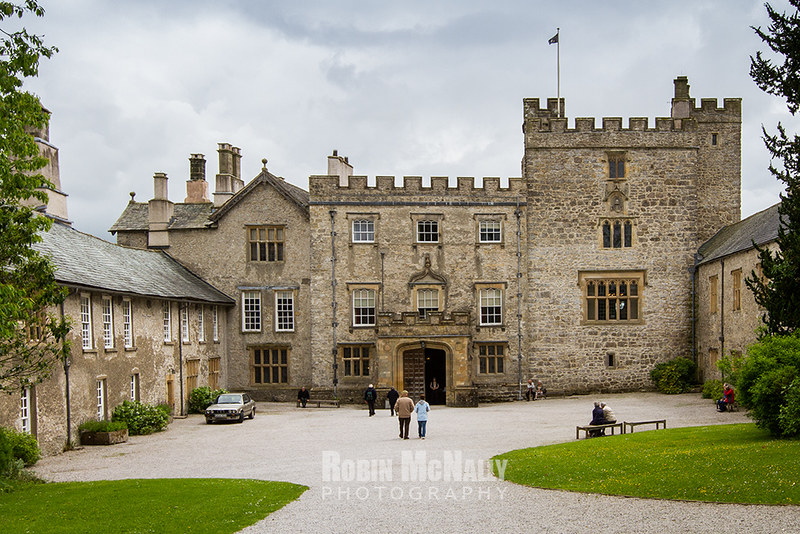
I will really miss this kind of history in the UK.
Thing's I'll miss:
  • The history. I love history. Don't all genealogists? I love it whether it's my own family history or not. And the UK is so rich in history. The castles, the halls and manors, the roman ruins, viking towns, etc. It's all so beautiful and romantic and it's been practically on my doorstep for eight years.
  • The countryside. Drive a mere half hour out of the city and all you'll see for miles are lusciously green rolling hills dotted with fluffy sheep and lined with stone walls and fences. The UK does not really have the "suburban" culture so common in America.
  • The accents. I loved getting to know all the different accents across the nation and I'll miss them all (well, most of them). At least my husband will be bringing his with us.
  • The music! This is essentially what brought my husband and I together in the first place, our mutual love for British music. Of course we'll still be able to listen to British music but we'll miss the live music scene and our favorite radio station, XFM Manchester. I honestly don't know what we're going to listen to in the car without it.
  • The chocolate. So smooth and creamy. Need I say more?
  • The pubs/Sunday roast. How would you like to have a Thanksgiving or Christmas dinner every sunday? Roast turkey, beef, chicken, ham, or lamb, with gravy, roasted vegetables, perhaps even mashed potatoes, and my personal favorite, Yorkshire pudding. And you get to eat all this in a beautiful, historical, cozy gastro-pub with a roaring fireplace. Sounds great, right? My husband and I have vowed to maintain a Sunday roast tradition but it will be at home, not in our favorite pubs.
  • No tipping necessary. In the UK, tipping is not commonplace and only done for exceptional service, which is the way it should be. By definition, gratuity is optional, not expected.
  • Fewer bugs. I'm the kind of person who, for some inexplicable reason, attracts mosquitoes like a moth to a flame. I go to the Caribbean and come back with 30+ bug bites. England thankfully has so few bugs that most homes don't even have screened windows. I will miss itch-free summers.
  • The plumbing. This might seem like a strange topic but it's time the truth was told! In the UK, toilets don't get clogged. That's right, you read it correctly, they don't clog. When my English husband clogged his first toilet in America, he had no idea what was wrong and I amusingly had to show him how to use a plunger. I couldn't understand how someone could reach the age he was without having clogged a toilet before! After living in the UK, I now understand. British toilets, instead of merely releasing water into the bowl to flush it, have a mechanism which pushes the water out forcefully, flushing it more effectively. Apparently, it is something which can be installed into American toilets, called a "flush assist" and for the life of me, I don't know why it isn't the norm like it is in the UK.

Thing's I won't miss:
  • The WEATHER. I don't think words can fully express how much I hate the weather here but I'll try. It's cold, it's damp, it's rainy, it's cloudy, it's windy. I never minded the rain until I moved here, I even rather enjoyed a good thunderstorm. But in eight years, I've never seen a real thunderstorm here, it's just a dull, dreary drizzle. Maybe once or twice a year I'll hear a low murmur of thunder and my husband will excitedly exclaim "Whoa, did you hear that?!" That's not thunder, thunder is getting snapped awake from a dead sleep by what can only be described as God himself smacking his whip against the skies. But it's not just the rain which depresses me, the average highs in the summer are in the low to mid 60s. The rare days when it gets above 70, the warmth is quickly countered by 20-30 mph gusts of winds. And the winters aren't much different. Snow? Fat chance. Just more rain and wind, with average temperatures only about 20 degrees lower. The one big snowstorm we had while I lived here was not dissimilar to the snowstorms that usually hit the Philly region at least once a winter, except everyone in the UK kept declaring that they hadn't seen snow like this in 20 years and no one knew how to drive in it, though in their defense the city is ill-equipped to handle it since they're not used to it. They salt and grit the roads but there are no plows. 
  • Having to do 90% of my genealogy research online. I have two, possible three English branches which originated from England and one of which were coincidentally from an area just outside where I live now in Manchester. But otherwise, the research that requires going to cemeteries and such in the U.S. could only be done in short bursts when I was visiting family back home. I can't wait to be able to go places for my research whenever I want!
  • People looking at me like I've got two heads because they're not expecting me to have an American accent. Really. You'd think they'd never heard an American accent before. I can't wait until I no longer feel like I don't completely belong or fit in where I live. I realize it means my English husband might feel this way in America but he's much more adaptable and laid back than I am.
  • Not being able to drive. Okay, I could have driven but it would have required learning to drive manual and on the left side of the road at the same time. I'll be so glad to be back in a situation where I am actually comfortable driving.
  • The spoons! Another strange topic but seriously, the spoons here are either too big or too small, like some kind of weird Goldilocks universe. The big ones look more like mixing or serving spoons and the small ones have a very shallow scoop. My husband didn't understand what I was complaining about until my mom sent me a normal American spoon and while he was using it with his cereal exclaimed, "This is a good spoon, I like it." Yeah, I know! 

I'm sure I'm forgetting some things but that's the bulk of my personal pros and cons of living in England. While it looks like there's more things I'll miss about it than those I'll be grateful to get away from, ultimately being near my friends and family again trumps everything. Also exciting about the move is that we'll we taking a ship instead of flying. I'd like to say it will be like taking the journey my immigrant ancestors did across the Atlantic but I'm pretty sure my trip will be much more luxurious!

Sunday, August 11, 2013

What's The Point?

I get asked this by a lot of people, what is the point of genealogy? Of learning about people I never even knew? Do my colonial ancestors really have anything to do with me, besides some DNA? I've even seen genealogy enthusiasts question it themselves. What is it about this that we enjoy so much? For me, there are many reasons, among them are uncovering mysteries, upholding family tradition, finding parts of my self identity, personalizing history, and honoring the memories of my ancestors.

My grandmother, who would have loved
to learn about all my discoveries
of our tree.
Quite simply, I enjoy the research and detective-like work. It's exciting to spend hours, weeks, months, even years looking for something and then finally find it. It provides such a sense of accomplishment, as though connecting the dots and uncovering a mystery. Sure, the information I've uncovered may seem mundane to some, not exactly a great mystery that will change the world, and the task of getting there will be tedious to others, but we all have our hobbies and who is to say which hobby is more worthy than another?

But more importantly, for me, it's also about family tradition. I had picked up my family tree where my maternal grandmother had left off, with lots of information and photos that my mother had held on to and lovingly passed on to me. I had grown up surrounded by photographs of my ancestors on first my grandmother's walls and then my mom's and I'm sure someday, they'll be on mine. So immediately, this was something that was a part of my family, and therefore a part of me. It was important to me because it meant something to my mom and grandmother. When I work on my tree and make new discoveries, I can't wait to share them with my mom and we frequently agree that her mother would have loved to hear about them too. Working on our tree has become a family tradition in itself.

I know some people struggle to understand how the lives of people I never met (or anyone else that I knew had ever met) could be a part of my self identity so I'll attempt to explain. I started researching my ancestry not long after I moved to the UK to live with my English husband. I discovered that I had an English branch of my tree which came from an area only about a 45 minute drive from where I was living in England! There are many things about England (especially the north of England) which I have fallen in love with (not in the least of all, my husband) and so I started to feel an emotional tie to my English ancestors because I feel I understand and love their culture. Of course it's changed a lot since they lived here but after living here for 7 years myself, England has become a part of my self identity and that allows me to identify with English ancestors.

Old Mennonite Meeting House
in Germantown, Philadelphia.
Part of my family history, part of
my home.
At the same time, being so far from my native Pennsylvania, my heart really did grow fonder for it and so I was thrilled to discover that many of my tree branches have a long, strong history in Pennsylvania, particularly the Philadelphia region. I never realized until I left how this area has been a huge part of my self identity and so when I found out that I have some very early colonial ancestry in Philadelphia, it only strengthened the emotional ties I have to the area. They say that home is where the heart is and my heart is in Pennsylvania.

On the other hand, it can be easier to identify with more recent immigrants. My paternal grandmother, known to our family as Nan, though born in America, was 100% Italian with six siblings. For me, growing up in this family with so many Italian-American aunts, uncles, and cousins was a large part of my life. Nan's father had immigrated in the early 20th century when he was a teenager and though I never met him (he died before I was born), I grew up hearing stories about him and it was obvious how much my big-fat-Italian-family had respected and admired him. I wish I could have known him but the more I learn about him through my research, the more I feel like I did know him. Genealogy doesn't have to be about going back to the 17th century and learning about people who are so far removed from your world that it doesn't feel like there's any connection. Genealogy can be about your parents, your grandparents, or your great grandparents. It can be about the people who, if not a part of your immediate world, were probably a big part of the lives of the people who you do know and love. They are a part of your self identity, if not directly, then through the influences of others. Each generation is like a bridge, linking the generations on either side of them together, even if they were never linked in life.

My Italian great grandparents, who I never met but almost feel
I have, through family stories and research.
Does one have to know their heritage to complete their self identity? Of course not, but personally, it has become a part of mine.

The third reason I enjoy genealogy is because this is history, personalized. I have always had an interest in history and when I'm not researching my tree (or blogging about it), I'm usually reading a historical novel or history book. Genealogy takes this to a personal level, like when I discovered my ancestor's street was flooded in the 1907 Pittsburgh flood, or when I found a headstone of my ancestor's that says "A Soldier of 1812". These are historic events that are now a part of my own family history. I never had much of an interest in learning about the American Civil War but now that I know I had relatives who fought it in, I do want to know more.

The final reason I research my family tree is to honor the memories of my ancestors. Again, one might ask "why bother, if you never knew them?" Well, that's exactly why I do it. It really depresses me to consider that when I'm gone, and when everyone who knew and loved me is gone too, I will be completely forgotten to history, as though my life meant nothing in the grand scheme of things. I am an average person, I accept that I am probably not going to wind up doing anything so important as to get my name in a history book, but what I have difficulty accepting is that eventually I will be entirely forgotten, even to my descendants. And most of my ancestors were the same, they were average people just like me - but they laughed, they cried, they loved, they got angry. That is perhaps the biggest reason I do this, so that the lives of my ancestors won't be forgotten this way. Just because they may not have been famous doesn't mean their lives were meaningless because if they were, then mine is too and I don't believe that.

Perhaps some people still just don't get why I love it so much, maybe it's just different strokes for different folks, but those are my reasons. What are yours? Why do you spend all this time, energy, and money on this particular hobby?

Thursday, August 1, 2013

August 1, On This Day in my Family Tree

Originally the Fever Ward of Oldham
Union Workhouse.
144 years ago in 1861, my 4th great grandfather John Fallows Sr. died at the age of 73 in Oldham, England. A farmer and laborer his whole life, he died penniless in the Oldham Union Workhouse, a place where people who could not support themselves due to poverty, age, or incompetence could find shelter, food, and work. Many workhouses later became hospitals and in particular, Oldham Union Workhouse is now Royal Oldham Hospital.

To the left is a Google Street image of what was originally the Fever Ward of Oldham Union Workhouse, now the Breast Care Unit of Royal Oldham Hospital. Though John Fallows may not have resided in the Fever Ward, it's an example of the architecture at the time.

Sources:
  • Death Certificate of: John Fallows. Filed 31 August 1896. General Register Office. Oldham, Lancashire, Vol 8d, p395. Informant: George Milne, Master of Union Workhouse.

Thursday, May 23, 2013

Seeking Margaret Ann McCracken Mills Bentley

New discovers in my own tree are fewer and farther between so to fill the gaps, I have also been periodically researching my husband's tree (as well as my sister-in-law's tree). This has been difficult because my husband has zero interest in genealogy - he doesn't mind me working on it but he doesn't know much about his family beyond his parents and doesn't see why he should. I've tried to tell him about my discoveries in his family tree but he just shrugs his shoulders. Sometimes, he pretends to be interested for my sake but I know he's just indulging me.

1901 Census of Bentley
family.
Click to enlarge
Anyway, I hit a roadblock rather quickly when looking for my mother-in-law's paternal grandparents, Francis (Frank) William and Margaret Ann Bentley. I quickly traced Frank's lineage back several generations but I didn't even know Margaret's maiden name, just that she was born in Salford, England around 1868.

In the 1901 census (left), I found them living in Salford with several children, three of whom were listed as Frank's stepchildren, Thomas, Sarah and Albert Mills. I also found an 1897 marriage index for Francis William Bentley to Margaret Ann Mills.

So is Margaret's maiden name Mills or is it her name from her first marriage? I don't know why I didn't just order the marriage record to see if her father's name was on it. Trying to cut corners, I guess. But Margaret married Frank in Salford when she was 29 and I couldn't find any earlier census records of an unmarried Margaret Mills born in Salford about 1868, even though she should theoretically be on the 1871, 1881, and 1891 censuses. So I was thinking it was more likely Margaret was married previously to a man by the name of Mills, given the names of Frank's stepchildren. There's also no record of Frank being married before Margaret so it's unlikely the Mills children are his orphaned stepchildren from a previous marriage of his own. Unfortunately, the children are too young to be found on the 1891 census so trying to trace Margaret through them is not possible.

1891 Census of Mills family
In the 1891 census, there are two married Margaret Mills who were born in the right area around the right time, one of them was married to Richard Mills and the other to Albert Mills in Oldham (just outside Manchester/Salford). Already, I am leaning towards Albert because we know Frank's stepson's name was the same. Sure enough, later census records confirm Richard Mills and his wife still living together when Margaret had married Frank so that rules out Richard. To further support the idea that Albert Mills from Oldham is the guy I'm looking for, I can't find him in the censuses after 1891 and there is a death index of what looks like him in 1895, two years before Margaret married Frank Bentley (but not before Albert Jr. was born the same year).

Another tree suggested that Margaret's maiden name was Warburton so I then found an 1889 marriage in the England & Wales FreeBMD Index suggesting Albert Mills had married Margaret Ann Warburton in Manchester. But the way the index works is by listing everyone on the same page without telling you who married who. However, the fact that they were on the same page (below, right) must not be a coincidence, right? The date fits, the names fit, the location fits.

Incorrect marriage index of Margaret Ann Warburton
Wrong! I tried to order the record under Margaret's name only to be told the record didn't exist. What? So I ordered it under Albert's name and it turns out, Albert had married the other woman on the list: Sarah Ann Weedle. Who did Margaret Ann Warburton marry? You may notice on the index listing to the left, there are five names listed, which is unusual because it's uneven amount and marriages come in couples, polygamy being illegal. As it turns out, Margaret Ann Warburton was transcribed on the incorrect page. If you view the original document, it says Vol. 8d, Page 358 but it was transcribed as Page 858, thus incorrectly listing her along with Albert Mills! So this Margaret Ann Warburton has NO connection to Albert Mills and this is why it's so important to look at the original document, not just the index. Looking at the index for Page 358, it looks like Warburton married either Daniel Silk or Christopher Harland. This is also why it's so important to be careful about what is added to other trees! I should really know better on both counts but everything did seem to add up at first.

Hopefully correct marriage index of Margaret Ann.
It still seems likely to me that Mills was Margaret's name from a first marriage since Frank has stepchildren with that name. And maybe it was the Albert Mills in Oldham she was married to - after all, the census of them in 1891 does list his wife as Margaret A. Mills, not Sarah. So where is the record for the correct Albert Mills marrying Margaret Ann? I don't know why but finding the likely candidate took some digging. I had to search only within the England & Wales Free BMD Index and restrict all the fields to "exact", then entered Albert Mills, married between 1887 and 1891 in Oldham. Then I did another one for Salford and finally found the record to the right. This makes sense because even though Albert was born in Oldham and he and Margaret lived in Oldham, Margaret was born in Salford. Additionally, I knew I'd seen the name McCracken somewhere else. Take a look at who is listed with Albert and Margaret Mills in the 1891 census above: a "visitor" Sarah McCracken.

I have since ordered Margaret's marriage record to Frank, which is what I should have just done in the first place but I thought finding her first marriage record would be more likely to give me her maiden name. I'm hoping that the full record for her marriage to Frank names her father, thus finally confirming her maiden name. Hopefully, it is McCracken and I will have redeemed myself in the eyes of the genealogy gods who had apparently forsaken me and taken me down a wayward path called Warburton.

In the mean time, I did some more research on McCracken and found Margaret's father was from Scotland. Excited, I told my husband that his mother may have had a Scottish ancestor and what does he tell me? "I already knew that." I must have looked aghast because he laughed and said "Oh, sorry, I meant to say 'Oh my God, that's brand new information!'" (Kudos to anyone who gets the 'Friends' reference).

On one hand, I'm glad because it confirms that I am on the right path with McCracken. On the other hand, I feel like strangling my husband for not telling me sooner.

Tuesday, February 5, 2013

Family History Writing Challenge Day 5: Fallows

The Fallows family is one of my favorites to research and write about, I think because there is SO much information on them. They were fairly wealthy and so there's hundreds of mentions of them in their local newspaper and dozens of surviving photographs - even a scrapbook I think my great grandmother made! Plus, my grandmother collected some more personal and character information on them, I gather from her mother-in-law before she died. This adds a personal touch to it, which can be rare in some parts of genealogy - we collect facts but how much do we really know about the character of these individuals?

Originally, the Fallows were a poor family from the Oldham/Royton area of Lancashire, England during the industrial revolution until my 3rd great grandfather, Josiah Fallows, immigrated to America in the mid-19th century to make a better life for himself. And that he did! By the time he died, he owned a large estate in Montgomery County, Pennsylvania and produced a brood of seven boys (what a household that must have been to grow up in!). The Fallows married into the Godshall family.

So here's the latest update of one of my longest family histories - 3,134 words, 23 sources, 14 photographs (I mean to add more photos, there are literally dozens more): Fallows.

Join the Family History Writing Challenge.